
NEWS CENTER
On August 10, 2026, the EU formally brought stainless steel products into the CBAM transitional reporting scope for relevant imports of steel and stainless steel profiles. For Chinese suppliers exporting stainless steel semi-finished products, profiles, and structural components to the EU, the change introduces a quarterly reporting requirement for embedded carbon emissions. This matters because the rule now reaches beyond policy discussion and into day-to-day customs clearance, cost calculation, and supply chain traceability for exporters, importers, and procurement teams handling EU-bound shipments.
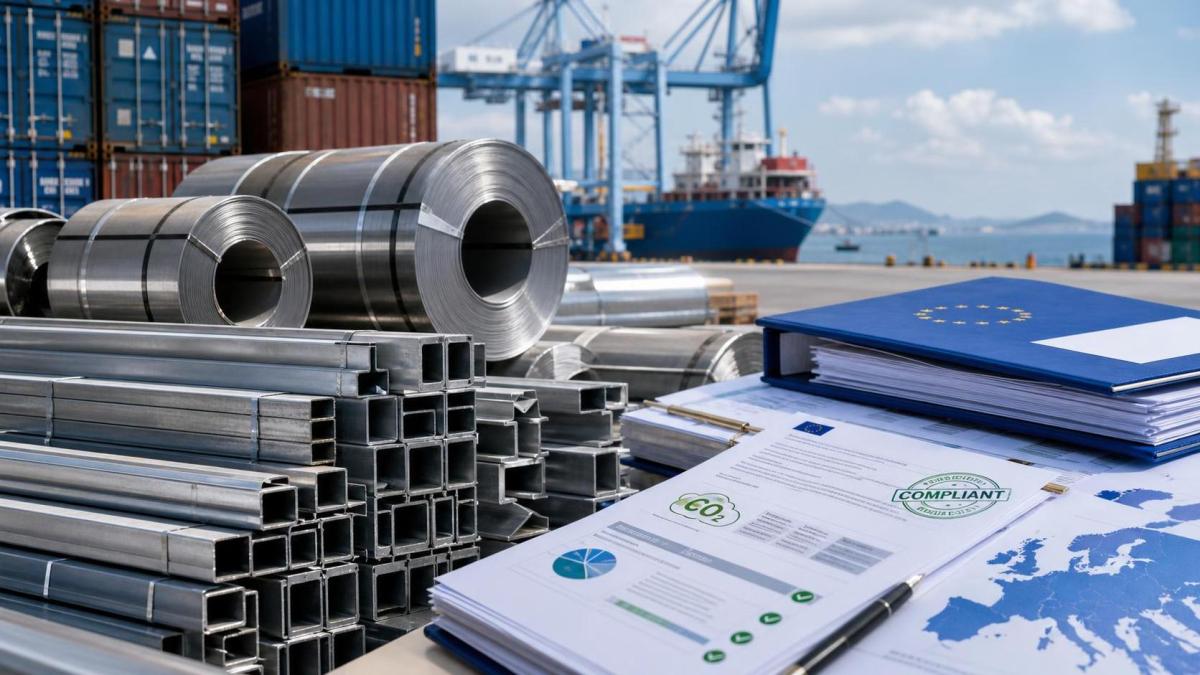
What the New Reporting Requirement Covers
According to the information provided, the change took effect on August 10, 2026. From that date, the EU CBAM transitional phase fully covers imports of steel and stainless steel profiles. Chinese suppliers exporting stainless steel semi-finished products, profiles, and structural components to the EU are required to submit quarterly reports on embedded carbon emissions. The information provided also states that failure to submit on time may result in cargo being held at port or refused entry.
Where the Immediate Pressure Will Be Felt
Export transactions now carry an added reporting burden
From an industry perspective, exporters are likely to feel the impact first because the reporting obligation is tied directly to EU-bound shipments of covered stainless steel goods. The practical effect is not limited to documentation alone; it touches shipment readiness, internal data collection, and coordination with buyers that depend on compliant customs processing.
Importers and buyers face compliance risk at the border
For procurement parties and import-side operators, the issue is closely linked to clearance compliance and import cost assessment. Analysis shows that once quarterly embedded-emissions reporting becomes a condition affecting entry, buyers can no longer treat carbon data as peripheral paperwork. They will need to pay closer attention to whether suppliers can support timely reporting and whether shipment files are complete enough to avoid border disruption.
Supply chain service providers may be pulled into traceability work
Observably, the requirement also affects parties involved in supply chain coordination, especially where goods move through multiple processing or delivery stages before export. Because the provided information highlights traceability responsibility, logistics, documentation, and trade support teams may need to align shipment records more carefully with supplier-provided emissions information and related product documentation.
What Companies Should Watch in Practice
Check whether covered product lines are already exposed
What deserves closer attention is whether a company's EU-bound stainless steel semi-finished goods, profiles, or structural components fall within the operational scope described in the provided information. Businesses involved in repeat shipments, framework supply, or project-based delivery should review affected product flows first, because the risk described is tied to actual customs handling rather than a distant policy signal.
Prepare quarterly reporting support before shipment pressure builds
Analysis shows that the quarterly reporting cycle may affect internal timing across sales, export, compliance, and documentation teams. Even without further execution detail in the input, companies should watch whether their current document flow can support regular embedded-carbon reporting without delaying dispatch or customs submission.
Reassess costing and procurement coordination
The information provided explicitly connects the rule to import cost calculation. It is therefore reasonable to monitor whether procurement terms, supplier communication, and shipment planning need to reflect added compliance work. This should be understood as a current area of attention rather than a confirmed cost outcome, since the input does not provide detailed pricing or implementation formulas.
Strengthen file consistency for traceability and delivery
Because the summary links the requirement to supply chain traceability responsibility, companies should pay close attention to the consistency of shipment records, technical files, and supplier declarations used in export transactions. The more immediate concern is operational coherence: if reporting, product identity, and shipment documents do not align, clearance and delivery risk may rise.
Why This Looks Like an Execution Signal
As an editorial observation, this development is more appropriate to understand as an implementation-stage signal than as a preliminary policy discussion. The reason is straightforward: the information provided describes a start date, identifies covered stainless steel product groups, sets out a quarterly reporting requirement, and links non-compliance to port detention or refusal of entry. At the same time, it should not yet be treated as a fully settled picture of all operating details, because no further official wording, interpretation standard, or procedural clarification is included in the input.
How the Market Is Likely to Read It Now
At this stage, the industry significance lies in the shift from broad carbon-border compliance expectations to a concrete reporting obligation affecting customs, cost review, and traceability for EU-directed stainless steel trade. A neutral reading is that this is already a landed compliance change for affected business flows, while the finer points of execution still require continued attention through actual market practice and any later clarifications.
Basis of This Article and What Still Needs Verification
This article is based on the user-provided news title, event date, and event summary. For developments of this kind, commonly relevant source categories may include official announcements, regulatory releases, customs or trade authority updates, industry association notices, standards-related documents, and reporting by established trade media. No specific official source link was provided in the input, so the exact official source still needs to be verified on an ongoing basis. Continued attention should also be given to later policy detail, implementation interpretation, tender document changes, industry feedback, and how companies are handling reporting in practice.